Foundations

Building confidence, knowledge and character through purposeful Montessori learning.

Junior Primary (6-9yrs) & Senior Primary (9-12yrs)

Primary School
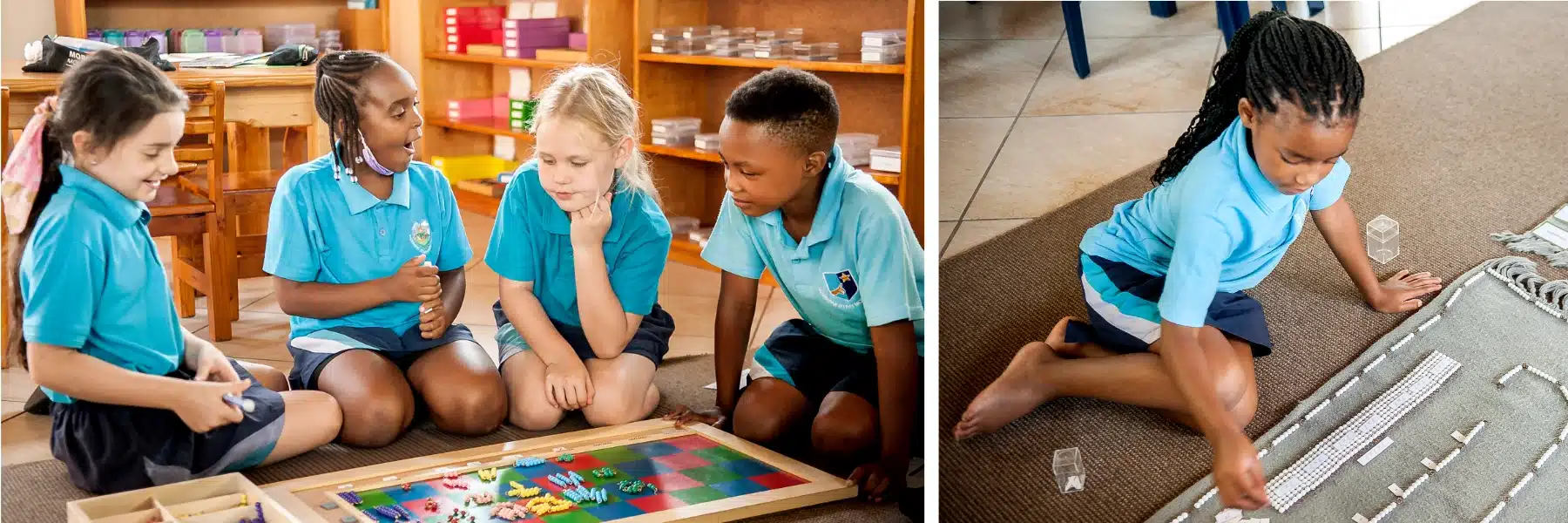
TriPhoto Panel Primary

Mission Statement

Children are encouraged to develop strong, creative, cognitive and thinking skills while maintaining strong ethical and moral values so that they can develop into the kinds of adults the future will need if this planet is to be sustained for generations to come.

We offer the Montessori curriculum for 6-12 years, (not the NCS CAPS curriculum used in traditional schools). The general education pedagogy of the Montessori system best serves the interests of accepted developmental norms of children as they grow and develop.

Montessori’s track record over the past 100 years, in use all over the world, and the thousands of successful men and women the system produced will stand as our guiding light as we guide the children in our care.

The Cosmic Education Curriculum

Overview

The Montessori curriculum for children in the second plane of development has evolved over the past one hundred years as, first Dr Montessori, and later, educators within the Montessori movement, experimented and observed;

  • What children of this age want to learn
  • When they want to learn it
  • How they learn it
  • What materials and activities can best help them to learn.

It is called by Montessori educators, Cosmic Education. This curriculum presents children with a full range of educational disciplines, including mathematics and language as well as the arts, sciences and social sciences. The materials and exercises for each discipline help children construct a mental order. The educational disciplines, however, are not presented to children as discrete areas in defined blocks of time, but in the form of interconnected, interrelated and open-ended curriculum. The children are shown how each topic is related to other topics in the same subject area and to other subject areas. The interconnections between disciplines happen at different points of time and in different ways for different children. In this way, the curriculum is experienced as a coherent whole, individualized to each child’s interest and learning style, rather than as an assortment of unrelated pieces of information. The approach can be adjusted to match the learning styles of both global and linear thinkers and helps individual children to relate their predominant style of thinking to the thinking styles of others. The range of the Cosmic Education curriculum is very broad, and covers topics not offered in [traditional] primary school.

Implementation

The Cosmic Education curriculum begins with the great lessons. Instead of giving children tiny, disconnected details, these stories give them the broad vision their expanding intellectual power demands. They become the framework for all subsequent lessons and activities, ensuring the coherence of the curriculum. In response to the children’s interests sparked by the great lessons, the teacher prepares lessons to harness those interests. The environment is designed to provide children with space and uninterrupted time to follow theseinterests, for example, in a great work.

The Cosmic Education curriculum for the second plane of development covers the following interrelated discipline areas:

  • Language
  • Mathematics with Geometry and Measurement as distinct areas of study
  • History
  • Geography
  • Science with Biology as distinct areas of study
  • Creative Arts
  • Physical education
  • Languages other than English

The Montessori environment prepared for the second plane of development, The Cosmic Education curriculum, reveals to children the gifts they have received from the natural environment and from human society. The curriculum is designed to develop a sense of gratitude and of responsibility in relation to the care of the earth and to the care of people on earth. Through their engagement with this curriculum some children may discover their own life’s vocation, for example, preserving the natural environment, or attending to the needs of others. As children increasingly understand how richly they are blessed both by the natural world and the work of other humans, their response is often an ambition to offer service of their own.

The Cosmic Education Curriculum

Overview

The Montessori curriculum for children in the second plane of development has evolved over the past one hundred years as, first Dr Montessori, and later, educators within the Montessori movement, experimented and observed;

  • What children of this age want to learn
  • When they want to learn it
  • How they learn it
  • What materials and activities can best help them to learn.

It is called by Montessori educators, Cosmic Education. This curriculum presents children with a full range of educational disciplines, including mathematics and language as well as the arts, sciences and social sciences. The materials and exercises for each discipline help children construct a mental order. The educational disciplines, however, are not presented to children as discrete areas in defined blocks of time, but in the form of interconnected, interrelated and open-ended curriculum. The children are shown how each topic is related to other topics in the same subject area and to other subject areas. The interconnections between disciplines happen at different points of time and in different ways for different children. In this way, the curriculum is experienced as a coherent whole, individualized to each child’s interest and learning style, rather than as an assortment of unrelated pieces of information. The approach can be adjusted to match the learning styles of both global and linear thinkers and helps individual children to relate their predominant style of thinking to the thinking styles of others. The range of the Cosmic Education curriculum is very broad, and covers topics not offered in [traditional] primary school.

Implementation

The Cosmic Education curriculum begins with the great lessons. Instead of giving children tiny, disconnected details, these stories give them the broad vision their expanding intellectual power demands. They become the framework for all subsequent lessons and activities, ensuring the coherence of the curriculum. In response to the children’s interests sparked by the great lessons, the teacher prepares lessons to harness those interests. The environment is designed to provide children with space and uninterrupted time to follow theseinterests, for example, in a great work.

The Cosmic Education curriculum for the second plane of development covers the following interrelated discipline areas:

  • Language
  • Mathematics with Geometry and Measurement as distinct areas of study
  • History
  • Geography
  • Science with Biology as distinct areas of study
  • Creative Arts
  • Physical education
  • Languages other than English

The Montessori environment prepared for the second plane of development, The Cosmic Education curriculum, reveals to children the gifts they have received from the natural environment and from human society. The curriculum is designed to develop a sense of gratitude and of responsibility in relation to the care of the earth and to the care of people on earth. Through their engagement with this curriculum some children may discover their own life’s vocation, for example, preserving the natural environment, or attending to the needs of others. As children increasingly understand how richly they are blessed both by the natural world and the work of other humans, their response is often an ambition to offer service of their own.

-- Maria Montessori

"Knowledge can best be given when there is eagerness to learn, so this is the period when the seed of everything can be sown, the child's mind being like a fertile field, ready to receive what will germinate into culture. But if neglected during this period, frustrated in its vital needs, the mind of the child becomes artificially dull, henceforth to resist imparted knowledge."

School Hours for Junior & Senior Primary

The school gate is opened at 07:00 and a supervisory staff member is on duty from this time.

The Primary school hours are 07:30 to 13:30. This includes time for snacks and play time.

The school does not assign schoolwork as homework unless in particular circumstances that will be discussed with the child’s parents beforehand.

After care from 13:30 to 17:00 is available at an additional fee.

Primary & Middle School Day

07:30 – 13:30
Monday to Friday

🚗 Drop-off: From 07:00
🌟 Aftercare: Until 17:00

Primary Intra & Extra-mural Activities

During school hours there are compulsory intramurals comprising:

  • Physical Education (daily)
  • Drama
  • Music
  • Gymnastics
  • Coding & Robotics

The fees for these are included in the school fee for billing purposes but may be shown separately on the Fee Schedule for information purposes.

Extra Mural - After Hours Music

Learning to play an instrument such as recorder, flute, piano, guitar, and other instruments are optional and are charged directly to the parent by the service provider.
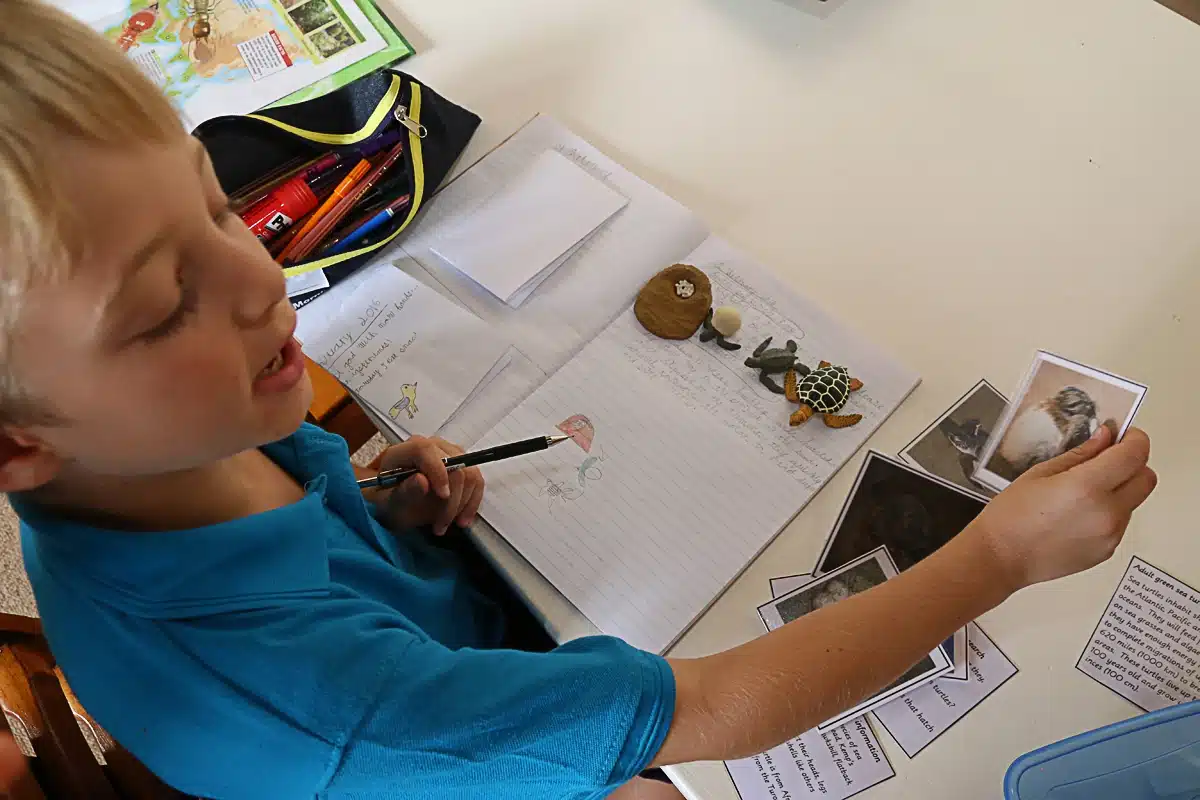
WorkingChild

Primary Aftercare

Primary Aftercare

The afternoon programme is designed to meet the needs of the children whose parents work a long day. The programme is open only to Morning Star Montessori children who are currently attending the school. Preschool and Primary aftercare is held on their respective premises.

Child 1400x600

Sport in the Primary School

Schools in residential areas have many advantages, one being proximity convenience to the community where they live. Available space for sports fields are in short supply. We have attempted to overcome this by the provision of a mini, all-weather, multi-sports field and an ample swimming facility.

Sports such as those listed are offered after school and form part of the regular daily aftercare activities for all children.

  • Recreational swimming in terms 1 and 4 of each year
  • Chess
  • Volleyball
  • Soccer
  • Draughts
  • Netball
  • Cricket
  • Running races

Many children who have real interest play sport at club level, dance or take part in acrobatics outside of the school environment.