
Early Beginnings
Preschool
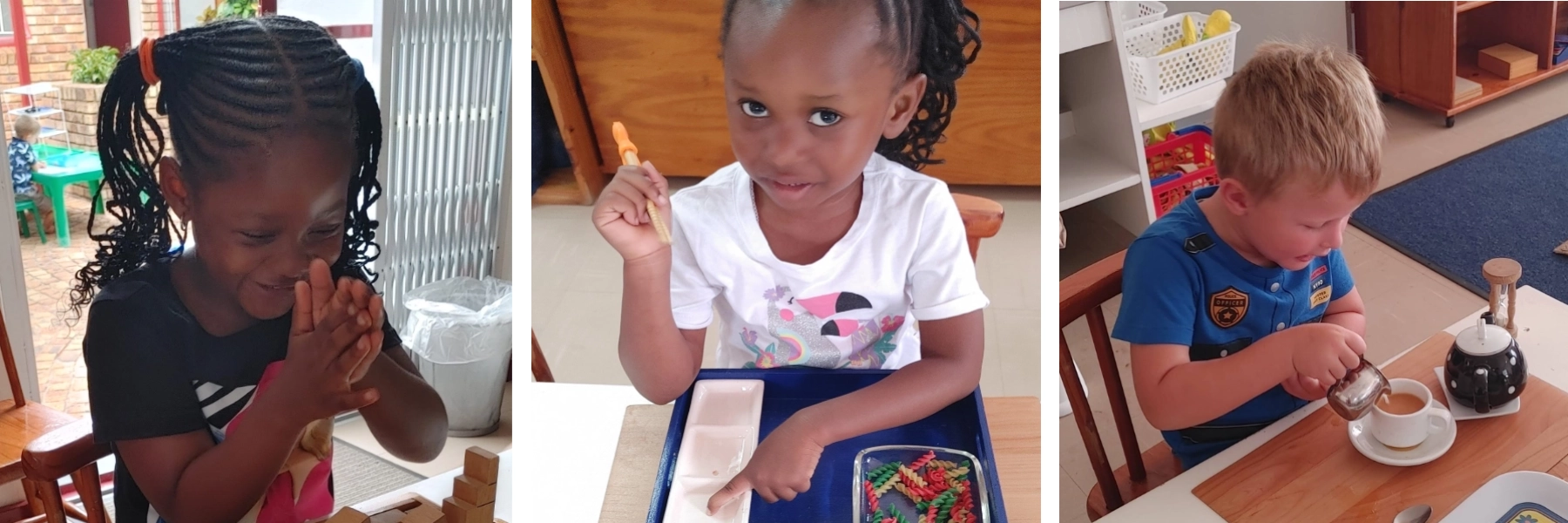
As well as being a space that provides a carefully planned, stimulating environment which helps the child to develop an excellent foundation for creative learning, the preschool environment now starts to open more exciting areas of learning such as the vast world of nature, of language and reading and of numbers. In this stage awe and wonder at the unfolding creation are at its best.
Questions that often arise from parents not yet versed in the Montessori system include:
Environment
In a Preschool Environment ten main developmental areas are supported:
- The need for order
- The development of language and communication
- The refinement of movement
- Socialization and the need for grace and courtesy
- Refinement of the senses
- Writing
- Reading
- Special relationships
- Music
- Mathematics
The work of the teacher is thus to plan, provide and facilitate these areas of growth.
Preschool Day Example
An example of a typical day in the Preschool Group:
07:00 – 08:00 Arrival
Early arrivals feed pets, assist or play with younger children or peers indoors, set out tables and other equipment.
08:00 - 11:00
Includes:
- Circle activities including theme discussion, register, calendar activities (day and date of the week/month), conversational news, story.
- Indoor and outdoor movement programme.
- Play with specialized Montessori equipment. Also Lego and puzzles.
- Creative activities such as painting, drawing, cutting, tearing, and pasting.
- Literacy and Numeracy.
- Exposure to life skills development is an integral part of the curriculum.
- Toilet and wash hands.
- Snack as required.
11:00 – 12:00 Outdoor play
12:00 – 12:15 Toilet and wash hands
12:15 – 12:45 Lunch (timing is group dependent)
12:45 - 13:00 Half-day children go home
13:00 – 14:30 Restful play
14:30 – 14:45 Wash hands and toilet
14:45 – 15:00 Snack
15:00 – 17:00 Outdoor play and gross motor activities until parents arrive
Preschool Aftercare

Preschool Extramural Activities
The Montessori curriculum covers aspects such as Art, Music, Movement, etc. and children may model with play dough whenever they want, however our Montessori trained and qualified teachers seldom have special skills in these subject areas. To afford our children every best experience of specialist skills, extra curricular activities are offered at a fee above the normal school fees.
Inside School Hours:
- Music - compulsory
- Gymnastics
- Pottery
- Ballet
- Swimming
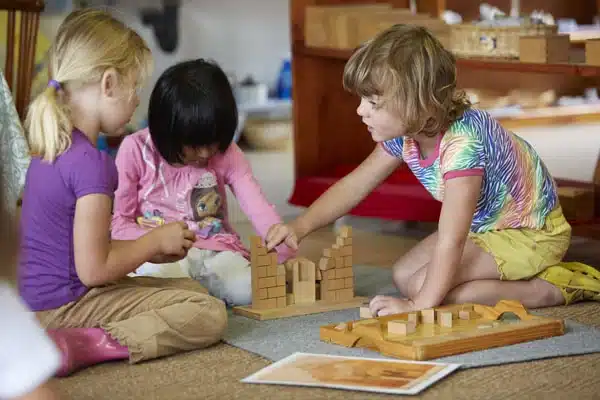

Preschool Holiday Club
A holiday school programme is run by the teachers during part of most school holiday periods for the Toddlers and Preschool children.
Details are posted prior to the end of each school term.
The cost for Holiday Club attendance is extra to the normal school fees.